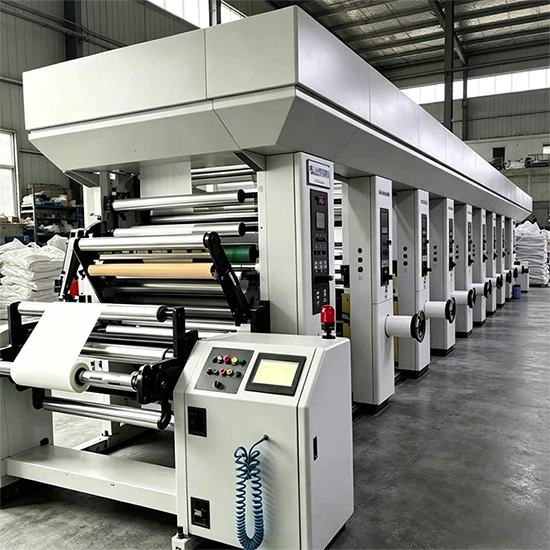

Chinese woven bag manufacturers are making significant strides in production technology, offering international buyers enhanced product quality, consistent lead times, and verifiable compliance data.
New-generation BOPP lamination lines now operate at speeds exceeding 500 meters per minute, with annual output surpassing 60,000 tons per line - a 30% increase over conventional equipment. Integrated in-line coating and lamination systems reduce handling, cut labor costs, and minimize production variability.
Fully automated slitting, digital printing, bag-making, and inspection systems now form a closed-loop production process. Intelligent inspection performs real-time color, pinhole, and dimensional checks, automatically rejecting substandard items to ensure batch-to-batch consistency - a critical requirement for overseas buyers.
Heat recovery systems, low-energy stretching units, and wastewater recycling (over 85% reuse rates) are now standard in upgraded facilities. These investments help suppliers meet international requirements including the EU's Carbon Border Adjustment Mechanism (CBAM), while reducing long-term production costs.
For global purchasers, these advancements deliver measurable benefits: lower defect rates (reduced from 2.8% to 2.3%), verified quality data per batch (tensile, waterproofing, tear resistance reports), water-based ink printing (over 85% adoption, odor-free and food-grade compliant), and full traceability via blockchain-based raw material tracking - meeting EU and North American audit requirements.
Chinese suppliers are no longer competing primarily on price. With smart manufacturing now standard across leading facilities, international buyers can source high-performance woven bags with the quality assurance and regulatory documentation required for today's global markets.